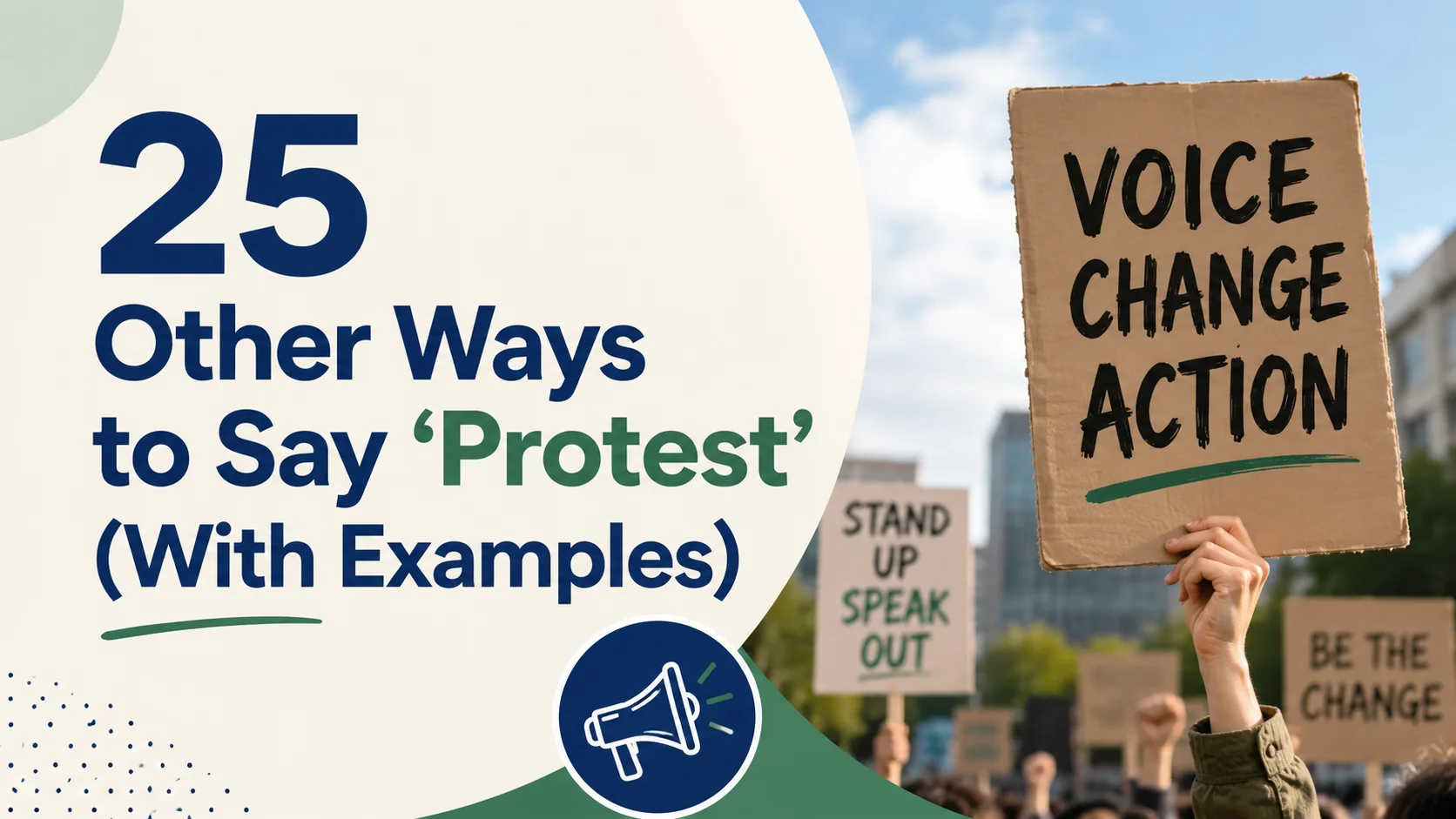
In Other Ways to Say ‘Protest’ (With Examples), you can explore different synonyms for protest that fit the right context. Words like demonstration, opposition, objection, dissent, criticism, resistance, advocacy, activism, movement, and reform help show an opinion, viewpoint, perspective, agreement, or disagreement. These examples and sentences help readers learn better ways to improve communication, expression, and their overall message.
Sometimes protest sounds too strong or formal for the situation. Using alternatives, meaningful alternatives, or alternative wording allows you to speak up, communicate, express, and articulate your thoughts, feelings, and emotions with care, empathy, warmth, and understanding. Good wording, the right choice of words, and a suitable tone improve clarity, respectful communication, effective messaging, message delivery, and stronger connection in any conversation or discussion.
Throughout history in the United States, public expression has been a core part of identity, heritage, and democratic values. Many quotes have been gathered to celebrate civil rights, social change, public voice, awareness, and inspiration. These 17 examples show how people can express feelings confidently and clearly, work together, and share ideas perfectly for their audience and purpose.
What Does “Protest” Mean?
The word protest simply means to express disagreement, concern or disapproval about something. It can be done through words, actions or peaceful gatherings. People usually protest when something feels unfair, harmful or needs change.
When to Use “Protest”
Use protest when you want to clearly show you disagree with an idea, decision or action, especially when the situation feels important, emotional or requires attention.
Benefits of Using This Word (Protest)
Using the word protest helps you be direct, honest and clear about your concerns. It shows you care deeply about what you are speaking up about.
Is It Professional/Polite to Say “Protest”?
Yes, protest can be polite and professional when used respectfully. The key is your tone. In formal settings, pairing it with a calm explanation makes it sound thoughtful rather than harsh.
Full List of 25 Alternatives to “Protest”
- Object
- Oppose
- Disagree
- Challenge
- Resist
- Speak Up
- Raise Concerns
- Push Back
- Question
- Criticize
- Take a Stand
- Stand Against
- Express Disapproval
- Voice Objections
- Call Out
- Argue Against
- Reject
- Contest
- Rebut
- Complain
- Point Out Issues
- Express Doubts
- Highlight Problems
- Say No
- File a Complaint
1. Object
Meaning: To express that you do not agree with something.
Examples:
- I must object because the plan doesn’t match our values today.
- They objected strongly when changes were announced without explanation.
- She chose to object after reviewing the unfair contract terms.
- Many residents objected because safety concerns were overlooked entirely.
- I respectfully object since the decision affects everyone quite seriously.
Tone : Calm, clear and respectful.
Explanation: Best when you want to disagree firmly but professionally, showing thoughtful concern rather than anger.
Best Use: Workplace conversations, formal letters, meetings and polite disagreements.
2. Oppose
Meaning: To stand against something you believe is wrong.
Examples:
- I oppose this policy because it harms our community unfairly today.
- Many neighbors oppose the project due to environmental risks.
- She opposes the rule because it limits student opportunities greatly.
- They oppose the changes since no one discussed them openly earlier.
- We oppose the decision because it creates confusion and unnecessary pressure.
Tone : Strong, principled and steady.
Explanation: Use it when you want to express disagreement with confidence and purpose, without sounding aggressive.
Best Use: Formal discussions, advocacy work, group decisions and public statements.
3. Disagree
Meaning: To not share the same opinion as someone else.
Examples:
- I disagree because the idea doesn’t support long-term growth properly.
- We disagree since the numbers don’t match the final report.
- She disagrees because the approach feels rushed and poorly organized.
- They disagree about how the project should move forward together.
- I respectfully disagree because better options are available right now.
Tone : Gentle, conversational and open-minded.
Explanation: It helps you express differences without conflict while staying respectful and kind.
Best Use: Everyday conversations, teamwork, family discussions and friendly debates.
4. Challenge
Meaning: To question or push back against something.
Examples:
- I want to challenge this rule because it feels outdated and unfair.
- She challenged the idea due to clear gaps in the research.
- They challenged the decision after reviewing all financial details carefully.
- I challenge that statement since evidence points in another direction.
- Many people challenge outdated systems needing meaningful updates today.
Tone : Strong yet thoughtful.
Explanation: It shows you are not afraid to ask deeper questions or push for clarity and fairness.
Best Use: Logical debates, academic settings, public discussions or professional settings.
5. Resist
Meaning: To refuse to accept something.
Examples:
- People resist changes when they feel unheard or ignored completely.
- She resisted the idea because it didn’t reflect community needs.
- He resisted the policy since it threatened employee safety first.
- They resisted pressure to sign something they didn’t understand.
- Many workers resist unfair treatment when unity grows stronger.
Tone : Firm, emotional and morally grounded.
Explanation: Use it when you want to show inner strength or shared community values.
Best Use: Social issues, advocacy, personal boundaries and ethical disagreements.
6. Speak Up
Meaning: To voice your concerns openly.
Examples:
- She spoke up because staying silent felt completely wrong today.
- Many employees spoke up about safety issues needing attention urgently.
- I spoke up since fairness matters deeply in our decisions.
- They spoke up to protect their rights and daily wellbeing.
- Students spoke up because the rules didn’t support creativity enough.
Tone : Empowering, brave and compassionate.
Explanation: It encourages honesty and helps people express concerns with confidence and dignity.
Best Use: Community issues, workplace rights, personal boundaries and supportive conversations.
7. Raise Concerns
Meaning: To share worries or doubts about something.
Examples:
- I want to raise concerns about communication gaps affecting everyone.
- They raised concerns about financial risks linked to the plan.
- Parents raised concerns because safety policies seemed unclear today.
- He raised concerns regarding the project’s environmental impact too.
- Many raised concerns after noticing repeated system failures recently.
Tone: Respectful and cautious.
Explanation: Perfect when you want to show thoughtfulness without sounding confrontational or emotional.
Best Use: Reports, evaluations, formal meetings and sensitive conversations.
8. Push Back
Meaning: To resist or disagree with pressure or demands.
Examples:
- We pushed back because expectations felt unrealistic and overwhelming today.
- She pushed back when deadlines became unmanageable for everyone involved.
- They pushed back since the proposal lacked essential information clearly.
- I pushed back because the plan didn’t reflect our priorities honestly.
- Many teams push back against unfair workloads causing burnout everywhere.
Tone: Confident and assertive.
Explanation: It communicates self-respect and boundaries without sounding rude or emotional.
Best Use: Workplace expectations, negotiations, personal boundaries and teamwork.
9. Question
Meaning: To express doubt or uncertainty about something.
Examples:
- I question this decision because evidence doesn’t fully support it.
- She questioned the method since results seemed inconsistent today.
- They questioned leadership choices affecting team morale significantly.
- He questions the reasoning behind sudden schedule changes recently.
- Many questioned the outcome after data problems appeared instantly.
Tone: Curious, thoughtful and analytical.
Explanation: It softens disagreement while still inviting clarity and deeper conversation.
Best Use: Data discussions, planning meetings and polite disagreements.
10. Criticize
Meaning: To express that something is wrong or flawed.
Examples:
- She criticized the plan because the results didn’t meet expectations today.
- They criticized leadership for ignoring employee feedback repeatedly.
- He criticized the report since major errors went unnoticed earlier.
- Many critics criticized the policy for lacking transparency entirely.
- I criticized the approach because communication stayed unclear throughout.
Tone: Direct and honest.
Explanation: Use it when you want to highlight flaws with intention to improve or push for change.
Best Use: Reviews, evaluations, public discussions, analytical settings.
11. Take a Stand
Meaning: To firmly choose a position.
Examples:
- She took a stand because fairness mattered to her deeply.
- They took a stand to protect student rights at school.
- He took a stand when workers faced unsafe conditions yesterday.
- Many took a stand for environmental protection everywhere.
- I took a stand because silence felt harmful and irresponsible.
Tone: Brave, powerful and inspiring.
Explanation: It expresses strong conviction and values.
Best Use: Social justice, advocacy, personal values, community efforts.
12. Stand Against
Meaning: To refuse to support something harmful or unfair.
Examples:
- We stand against actions harming community trust unjustly.
- She stands against rules limiting student creativity greatly.
- They stand against discrimination affecting workplace morale badly.
- He stands against decisions hurting vulnerable groups everywhere.
- Many stand against systems blocking equal opportunities consistently.
Tone: Bold and determined.
Explanation: Use it when taking a clear moral or ethical position.
Best Use: Social issues, activism, fairness discussions.
13. Express Disapproval
Meaning: To show you do not agree with something.
Examples:
- I express disapproval because the policy feels unfair today.
- She expressed disapproval when changes happened without notice.
- They expressed disapproval over incomplete and unclear guidelines.
- He expressed disapproval about rising costs hurting families.
- Many expressed disapproval regarding inconsistent communication recently.
Tone: Polite and measured.
Explanation:It helps you stay professional while addressing concerns honestly.
Best Use: Emails, meetings, evaluations, formal discussions.
14. Voice Objections
Meaning: To express clear disagreement.
Examples:
- I voiced objections because safety concerns were ignored again.
- She voiced objections about rushed decisions lacking clarity.
- They voiced objections after reviewing inaccurate data yesterday.
- Many voiced objections concerning incomplete project planning.
- He voiced objections because fairness wasn’t prioritized enough.
Tone: Formal and confident.
Explanation: It communicates disagreement in a structured and respectful way.
Best Use: Legal settings, professional reports, meetings.
15. Call Out
Meaning: To bring attention to something wrong or unfair.
Examples:
- She called out behavior that harmed team trust yesterday.
- They called out mistakes affecting customer experience badly.
- I called out unfair rules hurting new employees today.
- Many called out leadership for ignoring concerns repeatedly.
- He called out misinformation spreading within the community.
Tone: Bold and corrective.
Explanation: Use it when you want to confront issues directly but with constructive intention.
Best Use: Social issues, accountability, fairness discussions.
16. Argue Against
Meaning: To present reasons why something should not happen.
Examples:
- I argue against the plan because evidence isn’t fully convincing.
- They argued against changes reducing team efficiency greatly.
- She argued against rules limiting fair participation today.
- Many argued against budget cuts hurting essential programs.
- He argued against strategies lacking long-term benefits.
Tone: Logical and persuasive.
Explanation: It helps you share well-reasoned disagreement without sounding emotional.
Best Use: Debates, strategy meetings, decision-making discussions.
17. Reject
Meaning: To refuse to accept something.
Examples:
- They rejected the offer because terms weren’t fair enough.
- She rejected the proposal due to unclear expectations yesterday.
- Many rejected the rule since it limited open communication significantly.
- He rejected the idea because evidence was missing completely.
- We rejected the plan after reviewing major inconsistencies today.
Tone: Firm and decisive.
Explanation: Use it when something cannot be accepted in its current form.
Best Use: Workplace decisions, contracts, personal boundaries.
18. Contest
Meaning: To challenge something formally.
Examples:
- She contested the results because errors appeared in calculations.
- They contested the decision due to missing critical evidence.
- He contested the report after discovering outdated data inside.
- Many contested rules that limited equal participation unfairly.
- I contested the outcome since procedures were not followed correctly.
Tone: Formal and structured.
Explanation: Ideal for situations requiring official review or correction.
Best Use: Legal matters, formal appeals, academic or workplace disputes.
19. Rebut
Meaning: To argue the opposite of a claim.
Examples:
- He rebutted the statement using clear and verified evidence today.
- She rebutted claims that lacked reliable support or data.
- They rebutted arguments after reviewing the entire presentation fully.
- Many rebutted assumptions based on outdated research entirely.
- I rebutted the idea because logic didn’t support it clearly.
Tone: Analytical and precise.
Explanation: Perfect when explaining why something is untrue or inaccurate.
Best Use: Debates, academic discussions, professional arguments.
20. Complain
Meaning: To express dissatisfaction or discomfort.
Examples:
- She complained because communication stayed unclear all week long.
- They complained about delays affecting project progress badly.
- He complained since the rules felt confusing and inconsistent today.
- Many complained about noise disrupting important daily activities.
- I complained because promised support didn’t arrive on time.
Tone: Emotional and honest.
Explanation: Works when you need to express frustration while seeking change or solutions.
Best Use: Customer service, personal frustrations, everyday issues.
21. Point Out Issues
Meaning: To highlight what is wrong or problematic.
Examples:
- She pointed out issues affecting workflow efficiency this month.
- They pointed out issues related to missing financial details today.
- I pointed out issues causing delays across multiple projects.
- Many pointed out issues during the final review meeting.
- He pointed out issues that required urgent improvements yesterday.
Tone: Helpful and constructive.
Explanation: It shows you want to fix problems rather than blame anyone.
Best Use: Work reviews, planning sessions, improvement discussions.
22. Express Doubts
Meaning: To share uncertainty or hesitation.
Examples:
- She expressed doubts because the plan lacked essential details.
- They expressed doubts about long-term project sustainability today.
- He expressed doubts regarding unclear safety measures earlier.
- I expressed doubts since numbers didn’t fully add up.
- Many expressed doubts after hearing inconsistent explanations repeatedly.
Tone: Soft, thoughtful and cautious.
Explanation: It introduces disagreement gently without sounding harsh.
Best Use: Sensitive discussions, strategy planning, risk evaluation.
23. Highlight Problems
Meaning: To draw attention to specific concerns.
Examples:
- She highlighted problems affecting team communication recently.
- He highlighted problems with outdated software tools today.
- They highlighted problems after reviewing customer complaints carefully.
- Many highlighted problems during the project’s final assessment.
- I highlighted problems to help us find better solutions together.
Tone: Clear and solution-focused.
Explanation: It shows you want improvement rather than conflict.
Best Use: Reports, teamwork, strategic planning.
24. Say No
Meaning: To refuse or decline something.
Examples:
- She said no because the project deadline felt impossible today.
- I said no since expectations didn’t match available resources.
- They said no when the terms became unfair unexpectedly.
- Many said no to unsafe work conditions previously.
- He said no because values didn’t align with the plan.
Tone: Direct and honest.
Explanation: It keeps boundaries clear while staying respectful and firm.
Best Use: Personal choices, negotiations, boundary-setting.
25. File a Complaint
Meaning: To make an official statement about a problem.
Examples:
- She filed a complaint because service quality dropped significantly.
- They filed a complaint after repeated safety concerns were ignored.
- He filed a complaint about incorrect billing yesterday.
- Many filed complaints due to unprofessional behavior witnessed publicly.
- I filed a complaint because clear solutions never arrived promptly.
Tone: Formal and serious.
Explanation: Best when informal communication fails and official action is necessary.
Best Use: Workplace issues, customer service, legal matters, community concerns.
Conclusion:
Finding different ways to say “protest” gives you more control over your tone, clarity and emotional impact. Whether you want to sound gentle, firm, professional or heartfelt, these alternatives help you express yourself with confidence and care. Choosing the right word shows emotional intelligence and helps your message feel more personal and respectful.
FAQs:
1. Are these alternatives stronger or softer than “protest”?
Some are softer, some are stronger. It depends on the tone you want.
2. Can I use these words in professional emails?
Yes, many options like object, raise concerns and express disapproval are highly professional.
3. Which alternative sounds calm and polite?
Disagreeing, raising concerns and expressing doubts are gentle options.
4. What should I use for serious issues?
Stand against, take a stand or file a complaint work well.
5. Which word is best for everyday situations?
Speak up, say no and ask questions that feel natural in daily life.
6. Can these alternatives replace “protest” in writing?
Yes, they fit essays, reports, emails and conversations.
7. What’s the most formal alternative?
Contest, rebut or file a complaint are highly formal.
8. Which option shows emotional strength?
Resist and stand against expressing strong personal conviction.
9. Can I use multiple alternatives in one message?
Yes, as long as your tone stays consistent.
10. Are these synonyms exact replacements?
They’re close, but each carries its own nuance and emotional shade.